
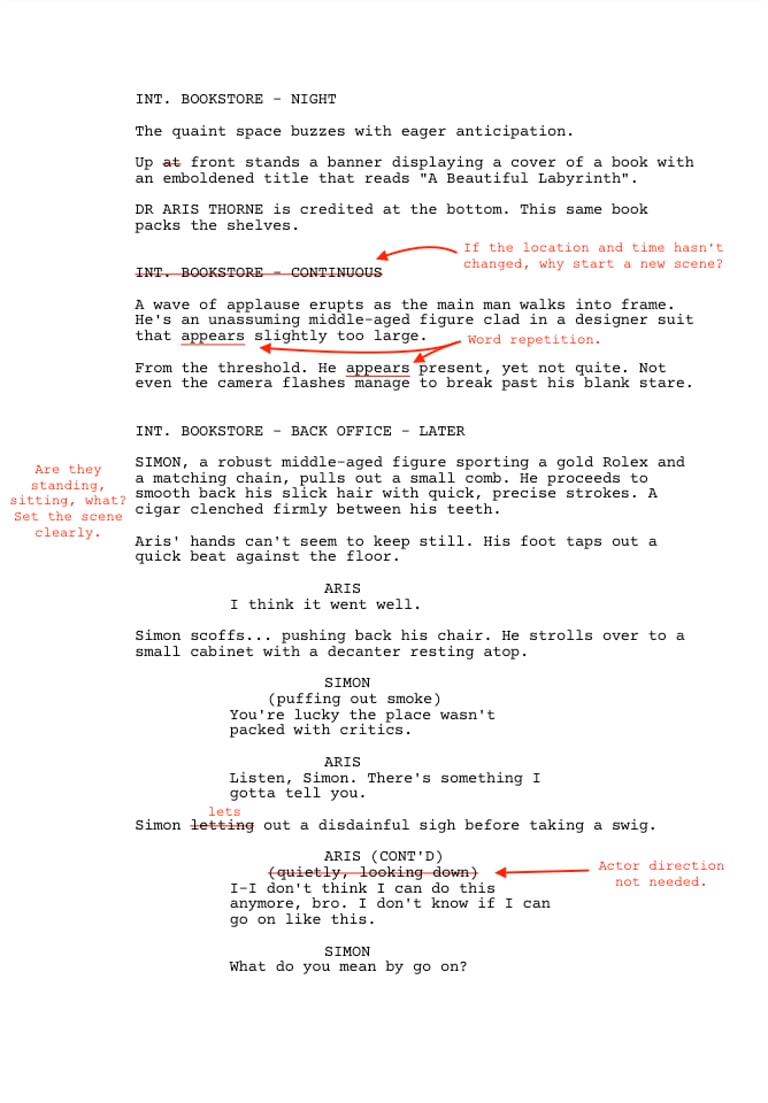
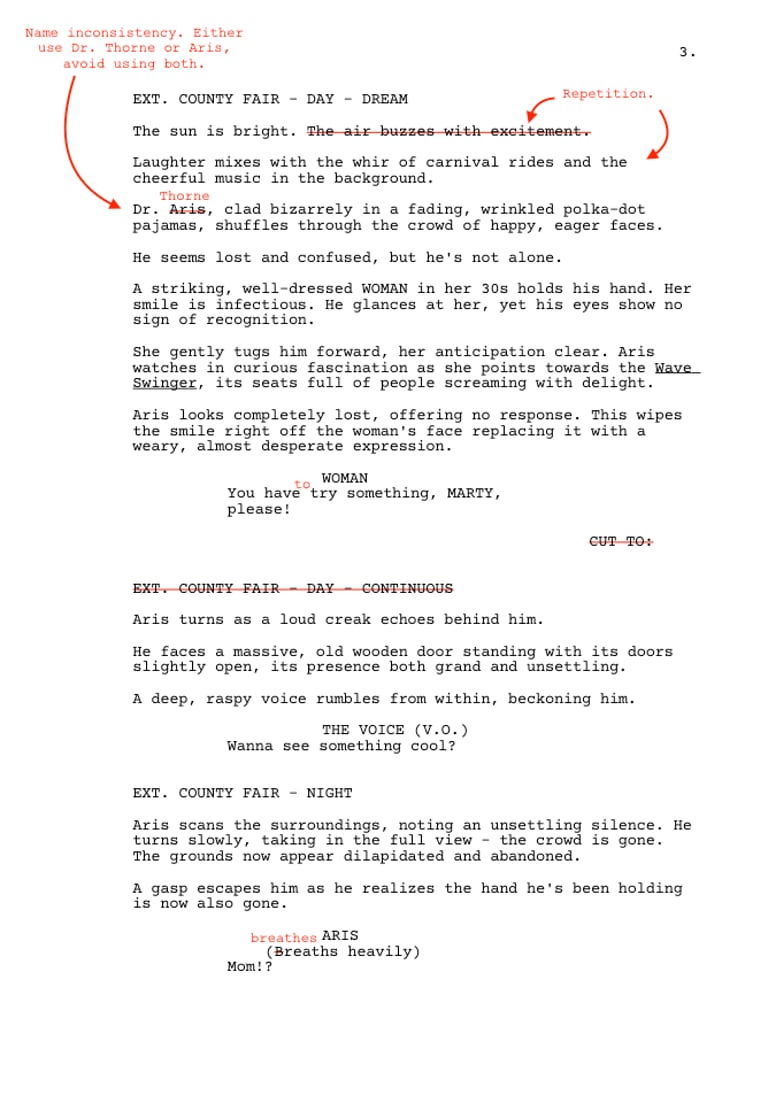
Read through the opening pages of this 13-page thriller and think about what grabs you and what makes you want to stop (if anything).
This is a work in progress, so try to ignore the proofreading errors, dubious formatting mistakes, and let's concentrate on the the story.
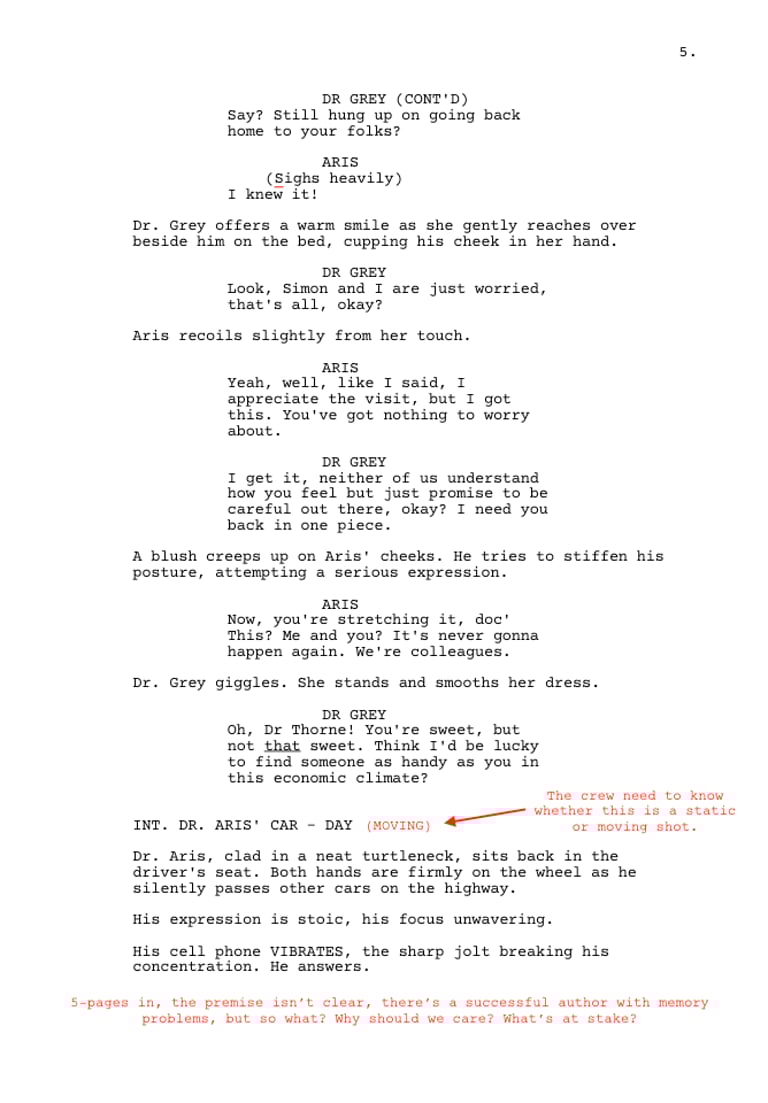
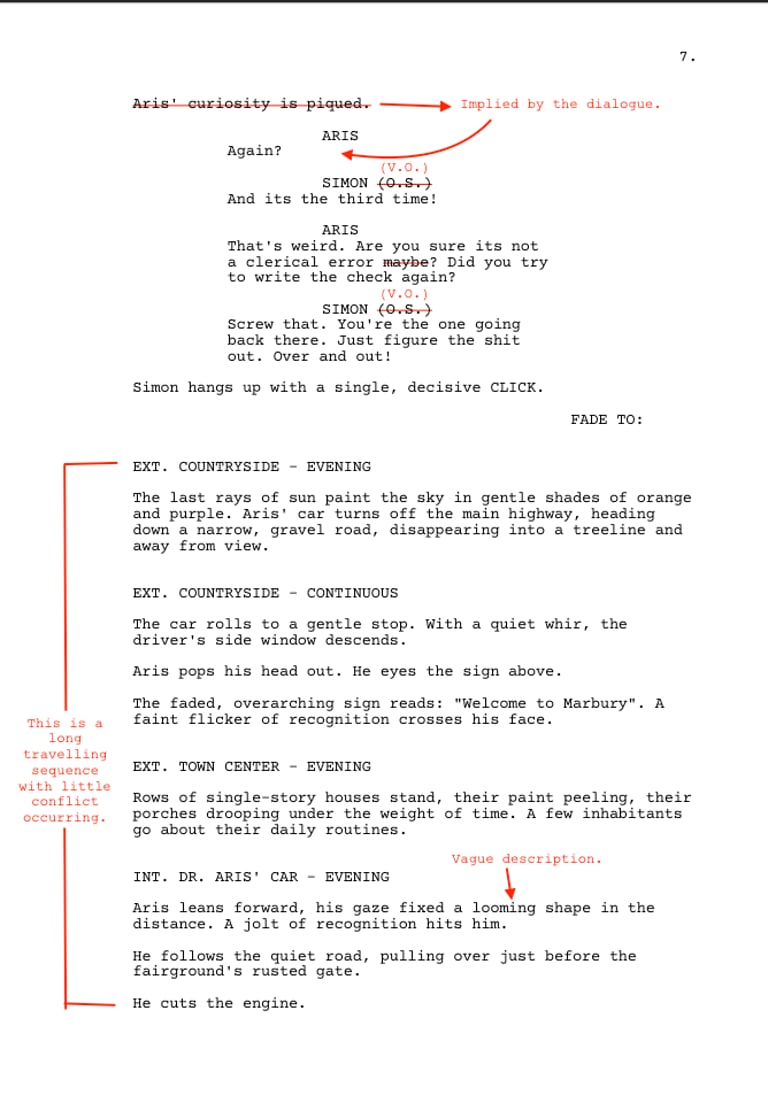
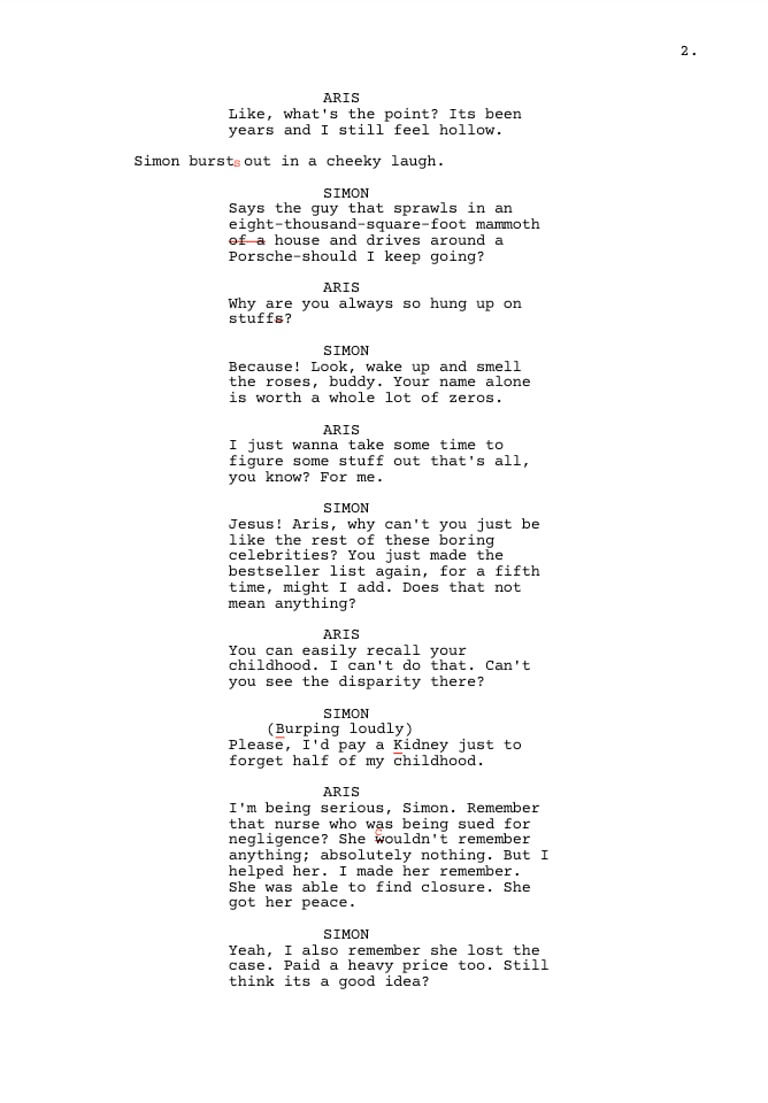
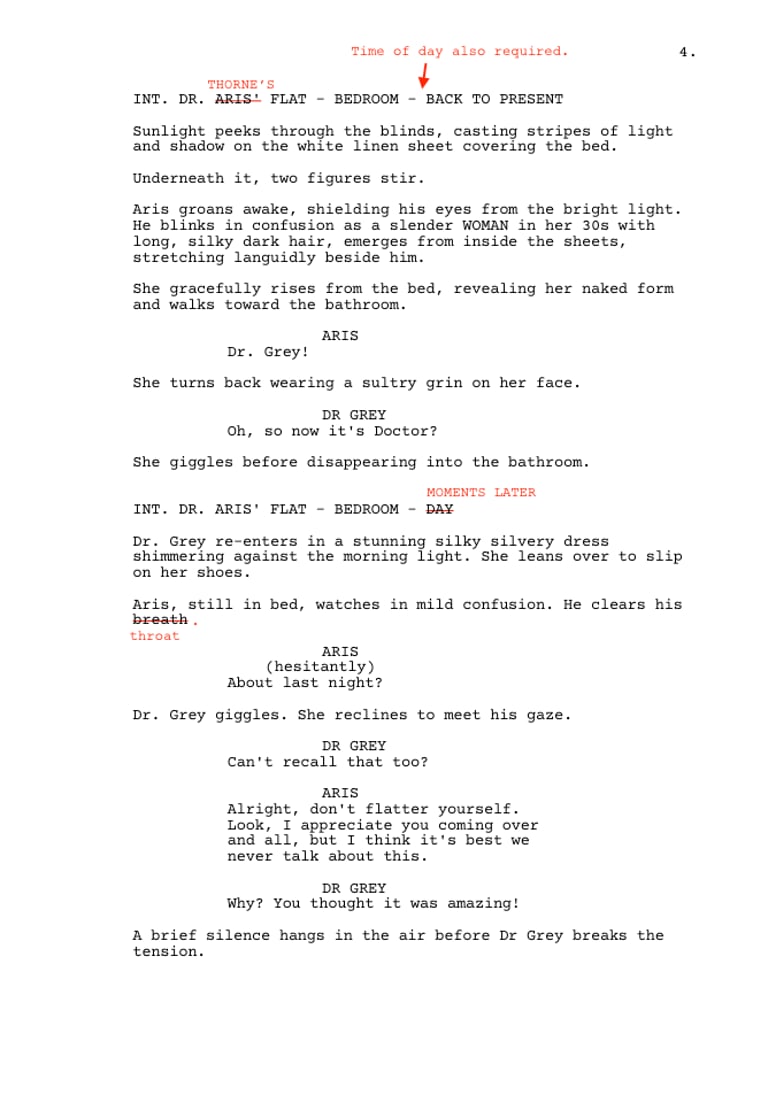
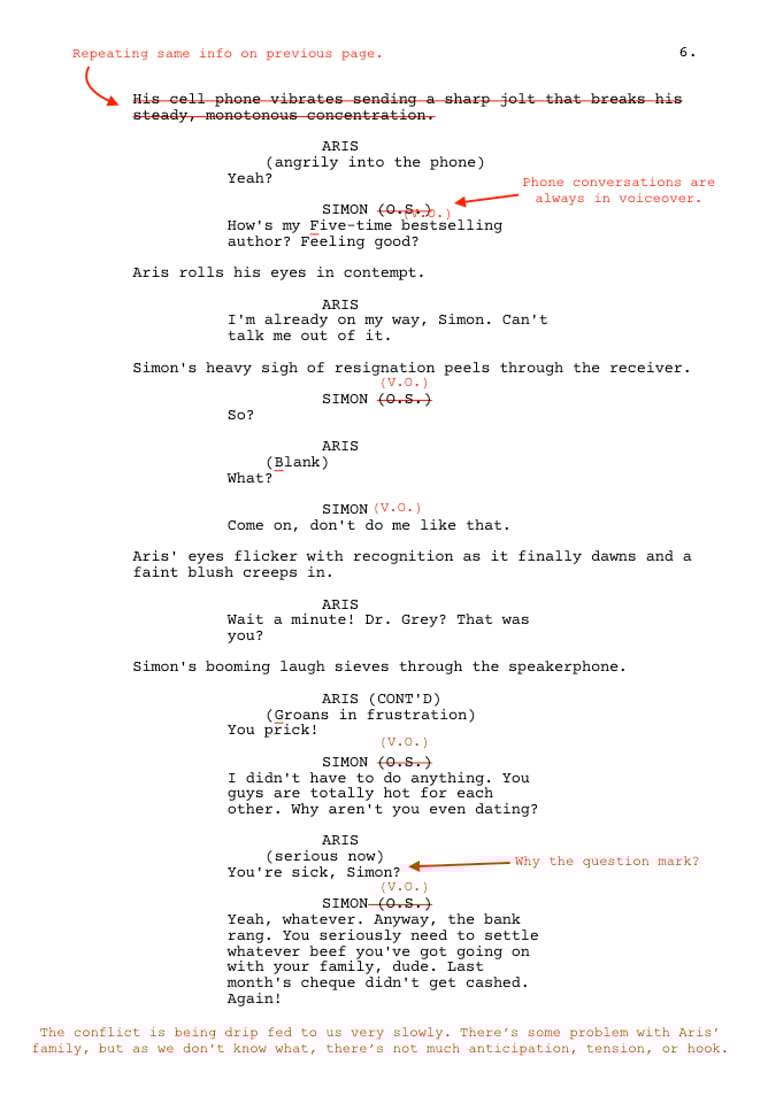
For me, the pacing is too slow. It takes a long time for us to figure out what's happening. Now, that's not always a bad thing, but given that this is a short film (I think?), time is kinda of the essence. I had to read the logline submitted by the writer to fully understand what the plot was about, and it may well be the case that this is unfinished and there's more to come, but in reality, we really should be able to gather all the info that the logline delivers during the first act, and that's not quite happening yet.
To fill you in on what happens after page 7, Aris visits a dilapidated fairground in his hometown, where he just happens to bump into a friendly Sheriff who somehow knew Aris would be there. Aris drives to his childhood home, where he has a long-winded dream about meeting a Lone Figure in the master bedroom, then wakes up in his car outside. In short, we're none the wiser as to what past trauma he's trying to confront or what the consequences are should he fail to do this, leaving more questions unanswered.
So, what's the fix?
Get to the point quicker. What's the problem, why should we care? I want to know that as soon as possible, otherwise reading becomes a chore.
Aris has gaps in his childhood memory that he HAS to fill. Establishing him as a successful author who's helped countless others with the same problem adds depth to his character, but him not remembering his one-night stand is perhaps a clumsy way of telling us he continues to have memory blanks. There's got to be a quicker, more effective way to tell us that info.
Telling us what's at stake would help us care more, too. There's some hints that there are financial issues, but nothing concrete, and it's too vague, so the audience isn't really going to care.
I'm not a fan of dream sequences because, as a viewer, you cannot trust them to be true, and they're far too open to misinterpretation. Memories are a little bit more reliable (although not always). In either case, it's often more effective to show how a past trauma is debilitating a character in the present than in the past. That way, we can clearly see the stakes. If A doesn't get fixed, then B will happen as a consequence.
That's my two cents, anyhoo.
Many thanks to the writer who sent this in. Keep chipping away at it and figure out what you want the audience to be feeling/thinking during every scene and ask whether each scene is doing enough to convey that.