Line Notes (8-page fan ficion)
Let's take a look at the effectiveness of the action sequence taken from this short sample.
LINE NOTES
1/12/20262 min read
Before we begin, let's quickly talk fan fiction. Oddly, this isn't the only Spider-Man spec script I've read recently. A writer submitted one to a screenwriting contest, and even though the contest reached out to explain that they couldn't accept work that uses someone else's IP, the writer refused the refund and still wanted to enter. While the script was written well enough, it was a clear pass because the writer didn't own the copyrights to that character.
Writing fan fiction is only valuable as an exercise to learn the craft. No one will touch it for fear of being sued. The same applies if you're writing a spec for an already existing TV show. Shows don't hire writers who have submitted a spec script of their own show, in case the writer turns around and claims their plot or episode idea has been stolen. Find a similar show to emulate instead.
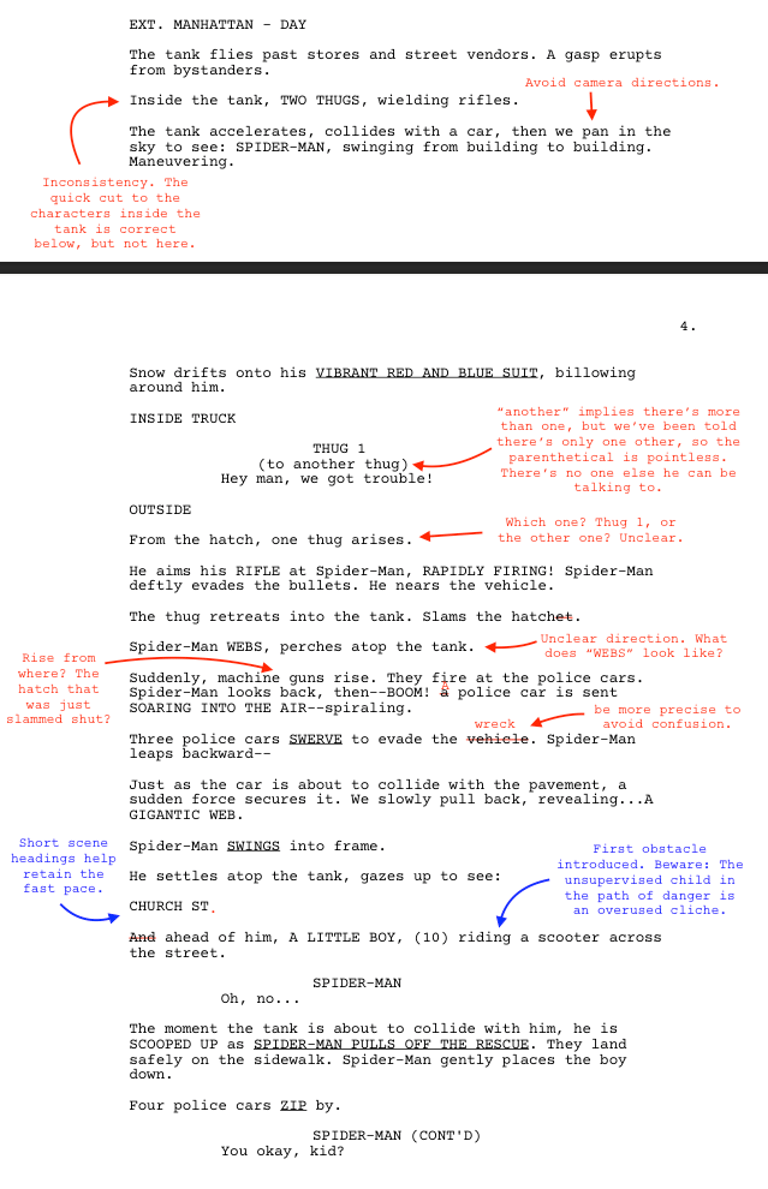
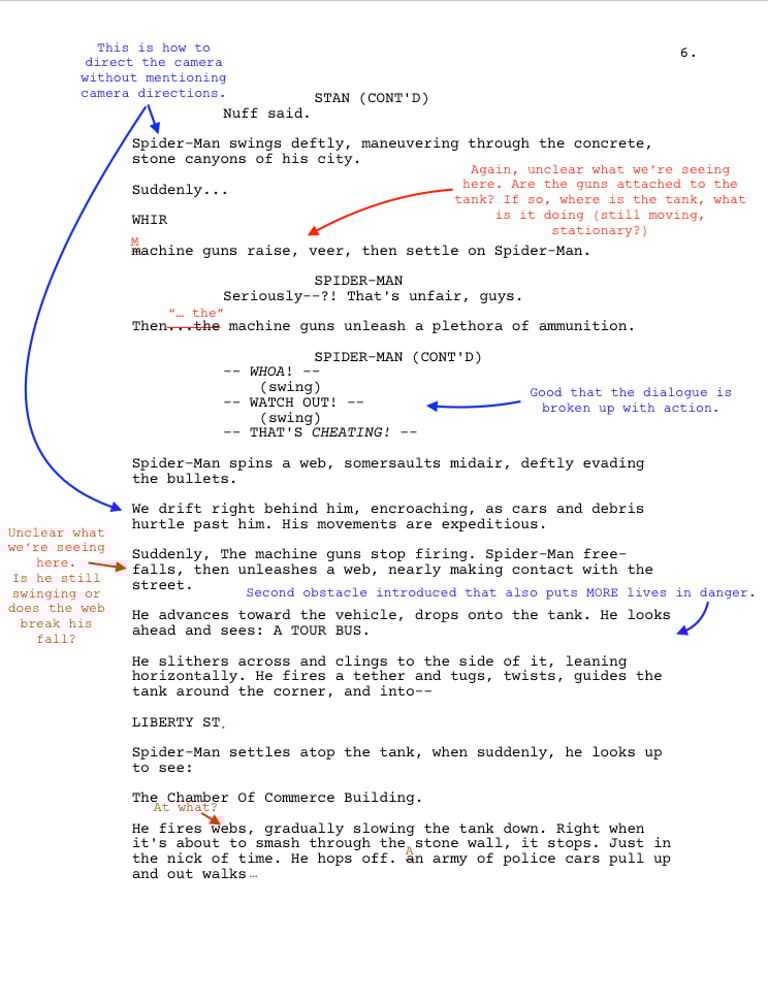
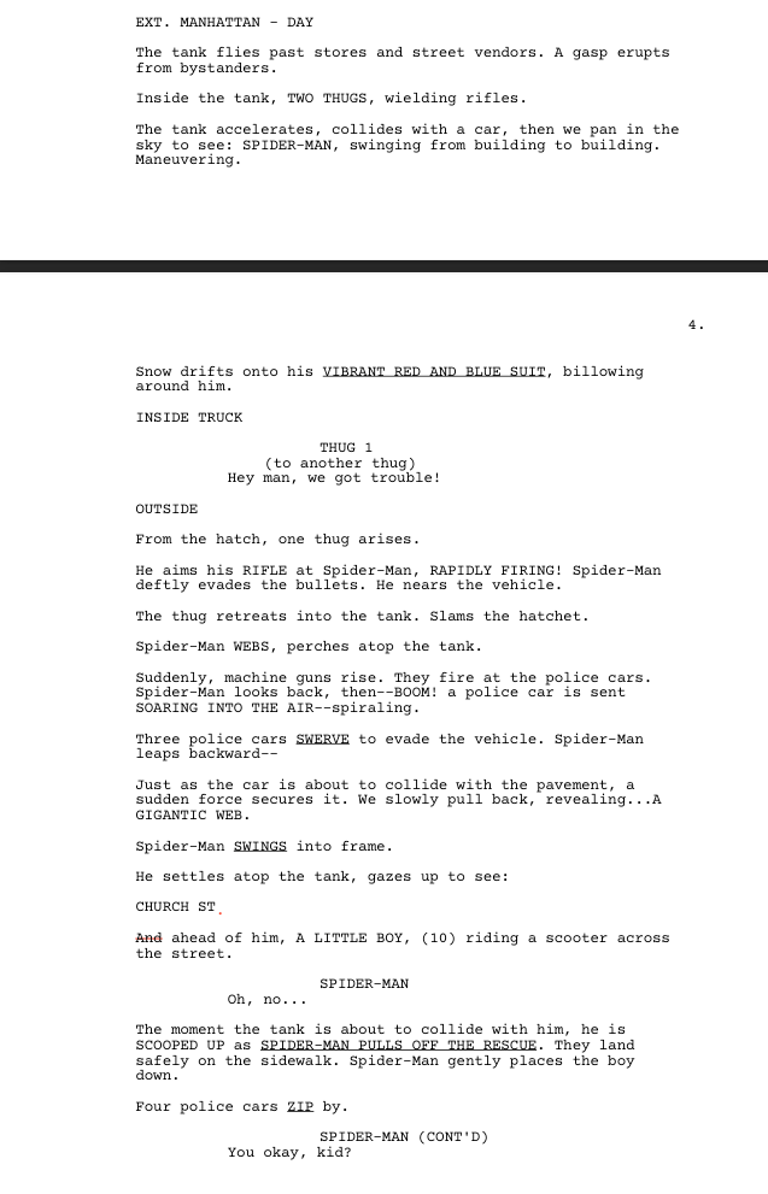
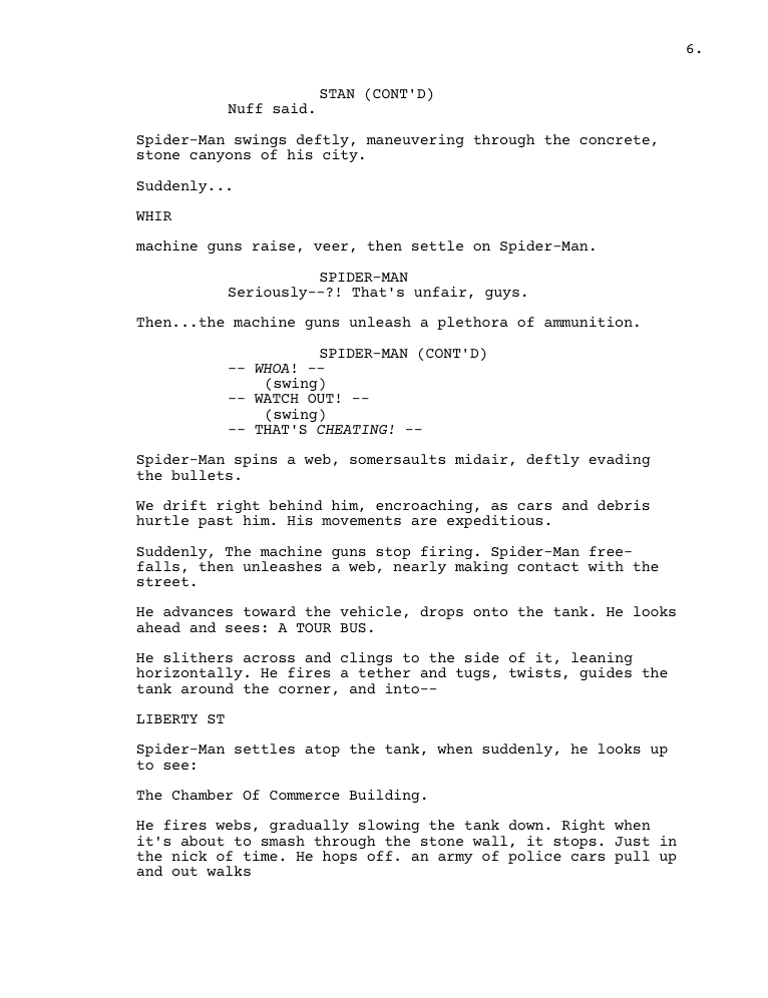
With that out of the way, the writer of this script wanted feedback on the action sequence, so that's what we'll focus on. Page 5 is missing, as the action paused while Stan Lee made a comedic cameo.
Some small tweaks, just to be a little bit more specific and clear, and this action sequence works fine, is engaging, and it captures the essence and excitement of the chase without bogging it down into too much detail or allowing it to run on for too much time.
That's the key when writing action sequences - Get the reader excited, and KEEP them excited!
If you’d like Instagram line notes on your script, send it in PDF form to scriptreaderscheatsheet@gmail.com. There’s no guarantee that your script will be used, as I only pick ones with something worth talking about, and by sending your script in, you’re giving express permission for excerpts to be posted publicly. The writer's name will be kept private unless stated otherwise by the writer themselves.
Overall, there's good pacing and momentum. Yes, the writer uses full CAPS and underlines for emphasis, and no, it's not necessary to do so, but it can be a way to pull the reader in, heighten the engagement, and make the prose a little more dynamic (and in this instance, aptly mirrors the comic-book style).
Action has been nicely spaced out on the page, with no huge blocks of text, but on closer inspection, is it always 100% clear as to what we can see on the screen, and do we always understand who is doing what? Here are my notes: